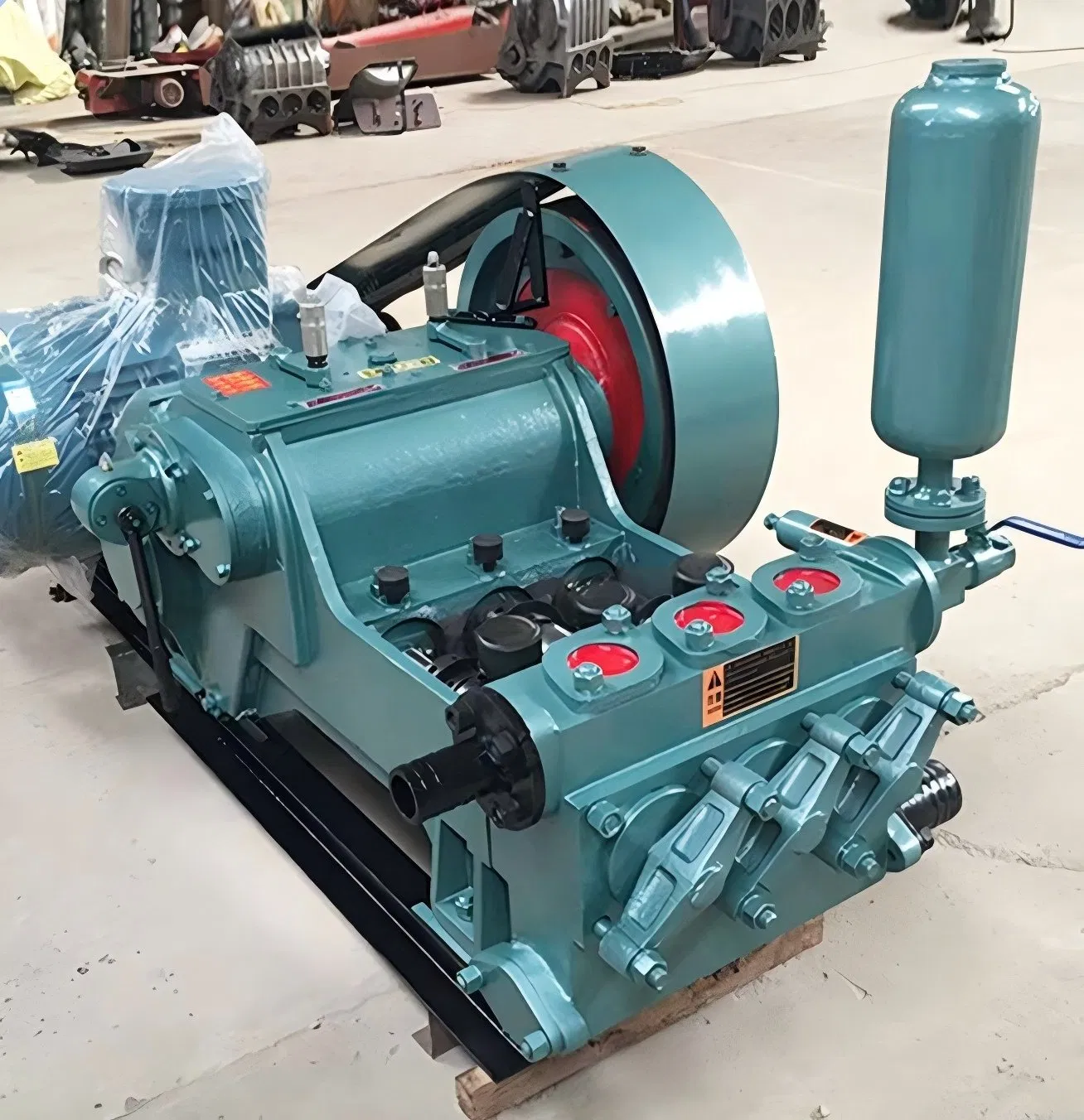
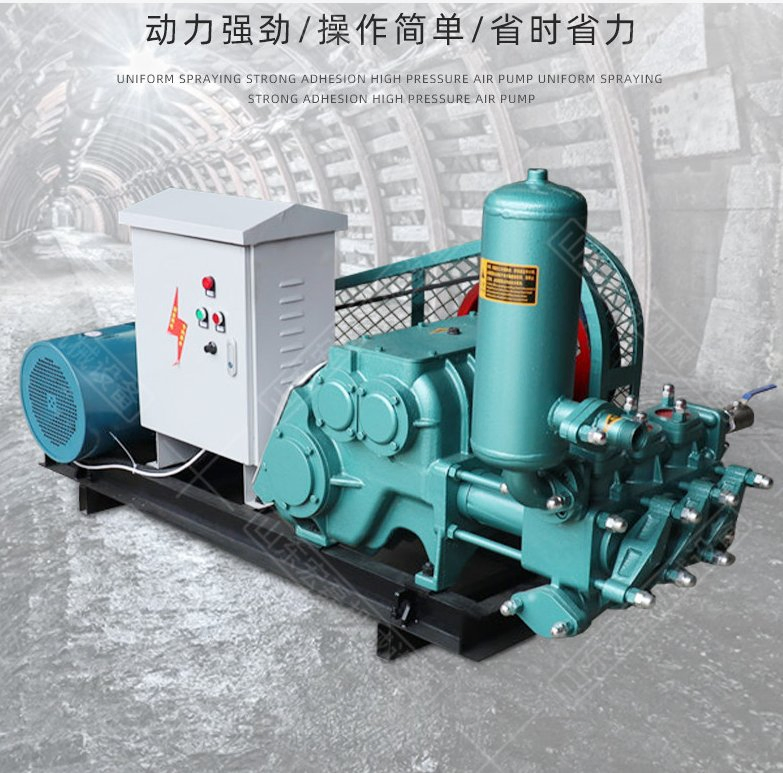
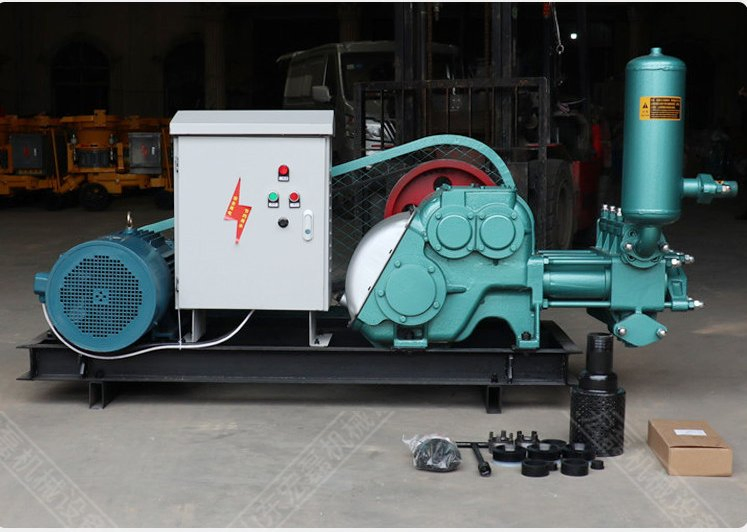
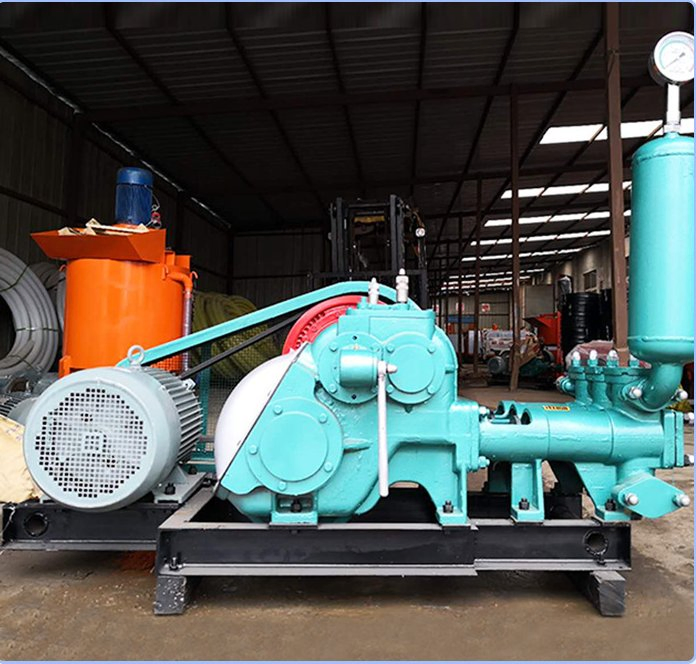
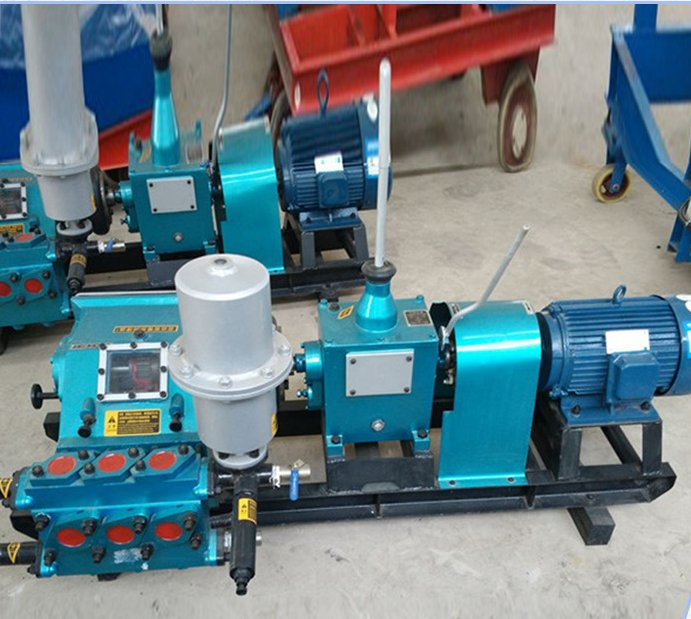
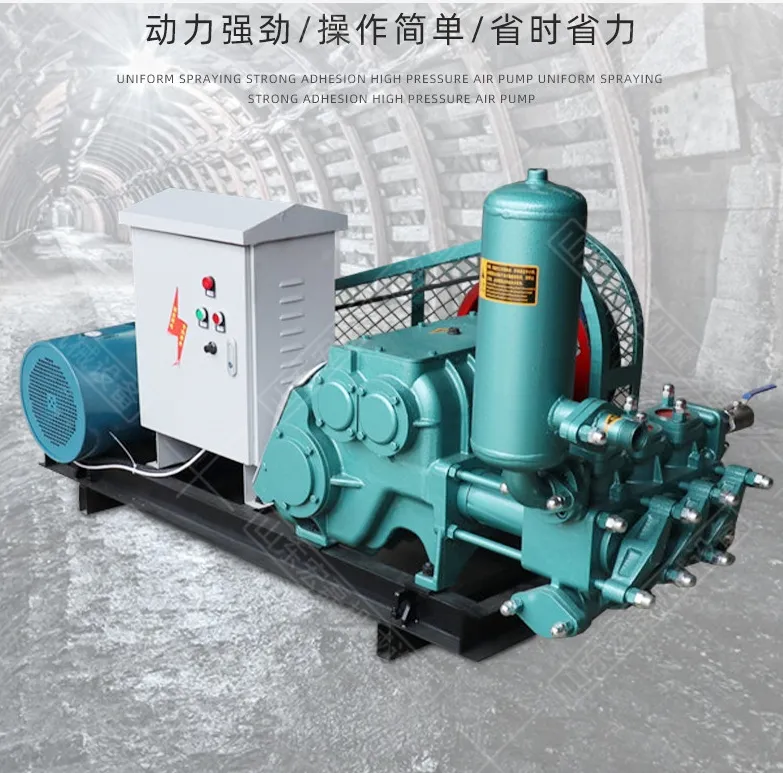
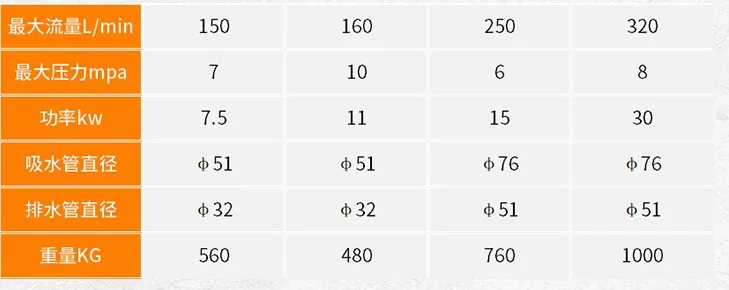
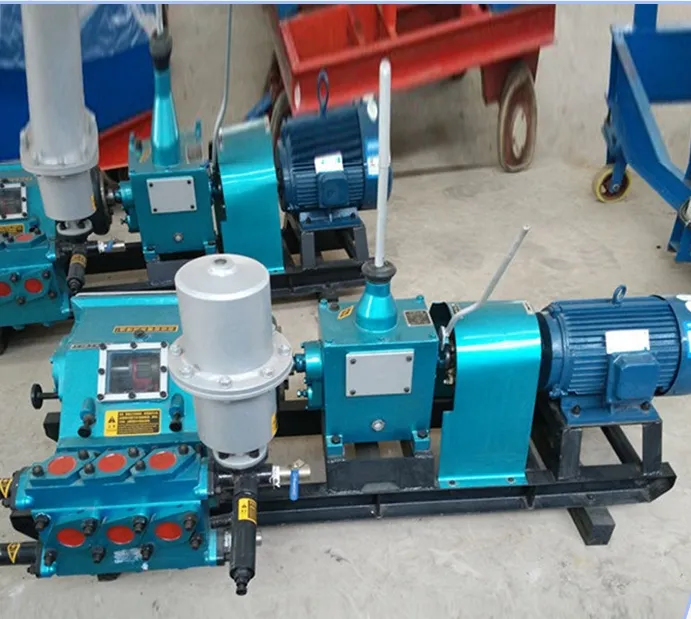
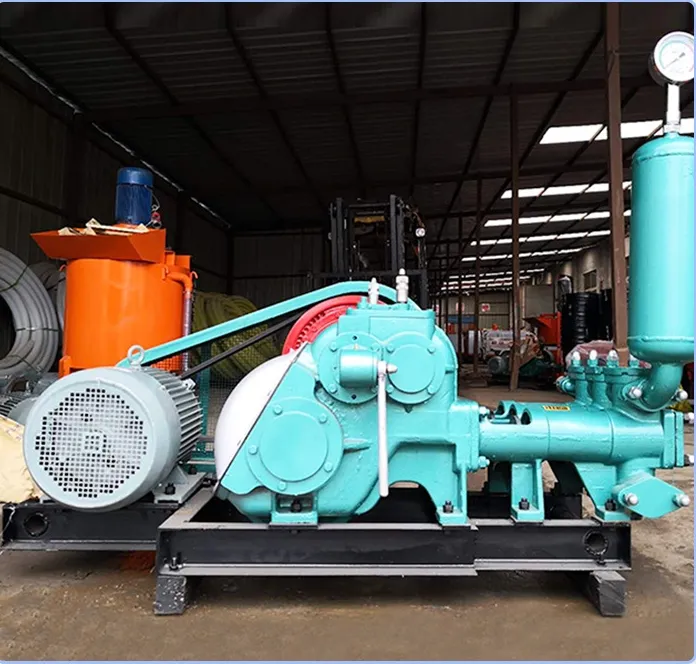
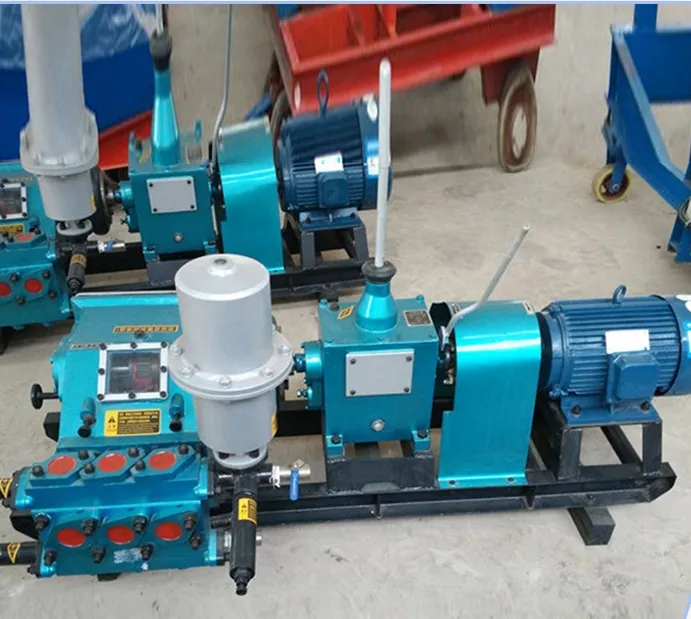
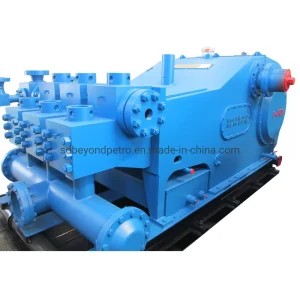
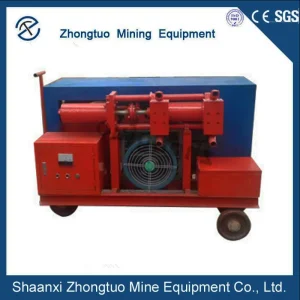
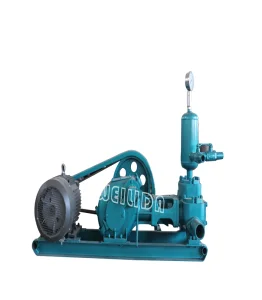
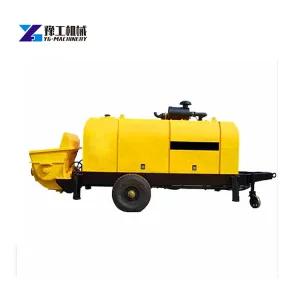
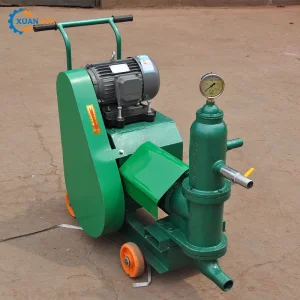
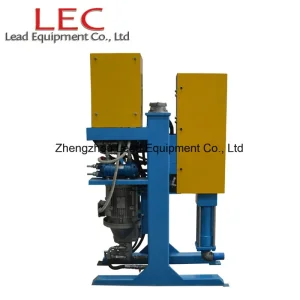
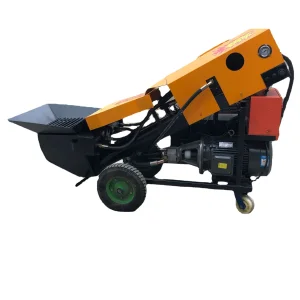
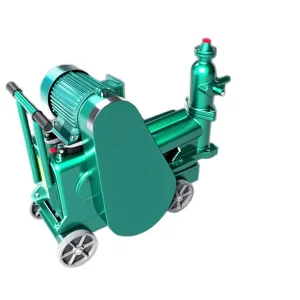
The reciprocating mud pump is a horizontal three-cylinder reciprocating double-acting piston pump with four speeds. The pump can be used as a cement slurry injection pump in foundation treatment projects, and the water-cement ratio of the cement slurry can reach 1:1. The flushing fluid used in this pump should not contain chemical impurities that corrode the metal and rubber parts of the pump.
Recommended Specific Gravity:
1.03-1.10
Viscosity:
18-25 seconds
Sand Content:
≤ 4%
pH Value:
7-8
Structural Features
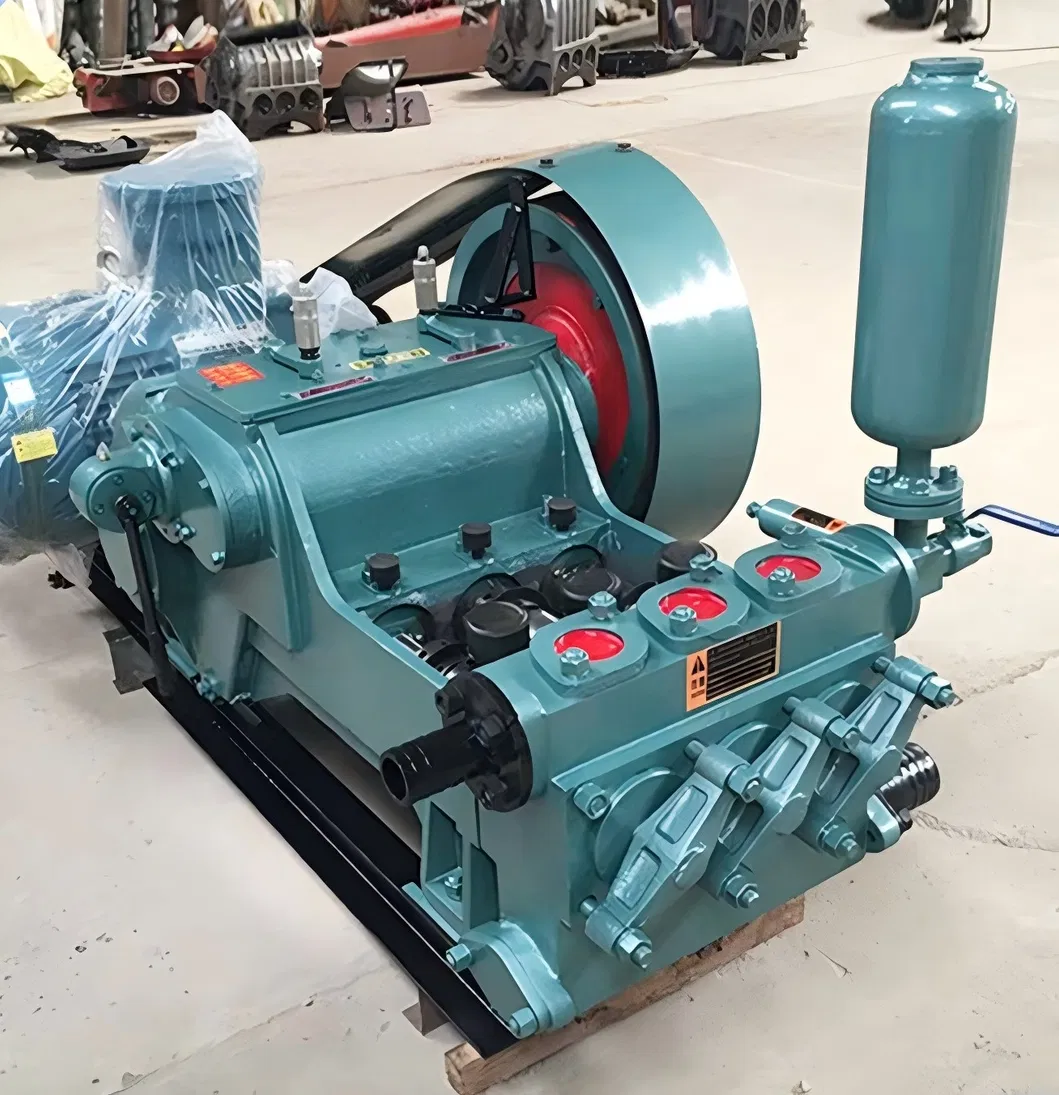
Pump Head: Main component of the hydraulic end, composed of three single-acting cylinders.
Pump Body: Equipped with gear change mechanism and crankshaft connecting rod.
Clutch: Controls engagement or disengagement of power for speed changes.
Key Components
This pump consists of nine essential parts: pump head, pump body, clutch, frame and power, protective cover, air chamber and pressure gauge, safety valve, tee, and water filter. The frame serves as the common base, providing a robust connection between the body and power source.
Frequently Asked Questions
Q1: What is the main application for this mud pump?
A: It is primarily used as a cement slurry injection pump in foundation treatment projects, capable of handling water-cement ratios up to 1:1.
Q2: What fluid specifications are recommended?
A: The fluid should have a specific gravity of 1.03-1.10, viscosity of 18-25 seconds, sand content below 4%, and a pH value between 7 and 8.
Q3: How does the pump handle overloads?
A: The pump includes a clutch with a friction plate designed to slip if the pump is overloaded, protecting the machine from damage.
Q4: What are the benefits of the air chamber?
A: The air chamber uses air compressibility to smooth out flow unevenness, ensuring a uniform discharge pressure during operation.
Q5: Is the pump easy to relocate?
A: Yes, it is designed with a compact structure, small size, and lightweight components, offering excellent decomposability for easy relocation.
Q6: What controls the clutch operation?
A: The clutch is controlled by a manual handle; moving the handle upward disengages the clutch, while moving it downward engages the power.
 SSG Machinery